Bosch Battery Date Stamp


In our blog, we thoroughly discussed how to determine the production date of Varta batteries.
This material gained significant popularity among our visitors, and now they often reach out to us ⏩for guidance on decoding the production date of Bosch batteries.
First, let’s clarify that we carefully studied ❓ the differences between Bosch and Varta batteries, and in conclusion, these batteries do not have significant differences, including the method of decoding the production date. The only notable distinction between Bosch and Varta automotive batteries is that Bosch (at least in practice) does not produce batteries without indicating the product series. The so-called original Bosch batteries, which are installed in vehicles directly at the manufacturer’s assembly line, always have a series designation. However, if you happen to come across such a battery without a series designation, its production date can be decoded in the same way as for Varta batteries.
So, the decoding of Bosch battery production dates is categorized by the product series, specifically:
- Bosch S3, Bosch S4
- Bosch S5 AGM
- Bosch without series designation (practically not encountered) – but if you do come across such a battery, refer to the decoding method for Varta batteries without a series designation, as it is entirely similar.
We have now covered the Bosch battery series, where each series shares the same method for decoding the production date, and we are ready to present this decoding method to you.
Bosch uses a unified coding system to indicate the production date of its batteries belonging to specific series. Lets take a closer look at how to correctly decode this information.
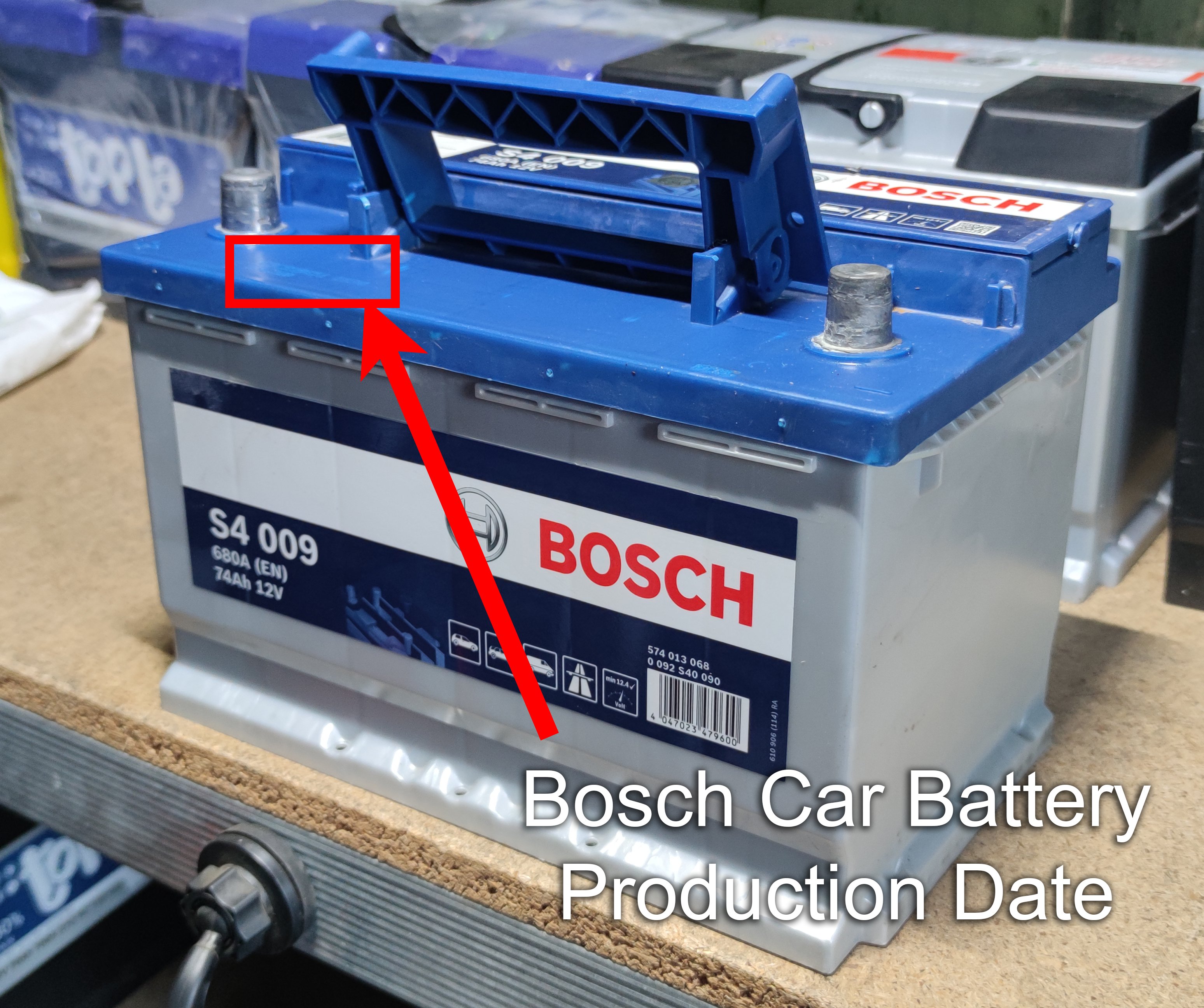
First, lets clarify which battery models are included in these series so that you can easily identify the one you are interested in (photo in the heading). We are talking about models like:
- Bosch S3
- Bosch S4
(⚠️It is important to note that this does not apply to the Bosch S5 AGM — we will review a separate, unique decoding system for this series later.)
Now that weve covered the series, if you have a battery from one of these lines, you will find a code embossed on the top cover, applied during production using a hot stamping method. An example of such a code is shown in the next photo:


In the photo example above, using the table below, you can see that the country code is indicated by the letter "C" (the country code decoding is provided at the end of the article), and the production year and month are indicated by the three digits "959." This means that the battery in our example was manufactured in November 2019. In the table below, you will find a convenient reference matching the month and year codes used in your battery’s labeling. This will help you accurately determine when it was produced.
| Year | January | February | March | April | May | June | July | August | September | October | November | December |
|---|---|---|---|---|---|---|---|---|---|---|---|---|
| 2010 | 17 | 18 | 19 | 20 | 53 | 54 | 55 | 56 | 57 | 58 | 59 | 60 |
| 2011 | 117 | 118 | 119 | 120 | 153 | 154 | 155 | 156 | 157 | 158 | 159 | 160 |
| 2012 | 217 | 218 | 219 | 220 | 253 | 254 | 255 | 256 | 257 | 258 | 259 | 260 |
| 2013 | 317 | 318 | 319 | 320 | 353 | 354 | 355 | 356 | 357 | 358 | 359 | 360 |
| 2014 | 417 | 418 | 419 | 420 | 453 | 454 | 455 | 456 | 457 | 458 | 459 | 460 |
| 2015 | 517 | 518 | 519 | 520 | 553 | 554 | 555 | 556 | 557 | 558 | 559 | 560 |
| 2016 | 617 | 618 | 619 | 620 | 653 | 654 | 655 | 656 | 657 | 658 | 659 | 660 |
| 2017 | 717 | 718 | 719 | 720 | 753 | 754 | 755 | 756 | 757 | 758 | 759 | 760 |
| 2018 | 817 | 818 | 819 | 820 | 853 | 854 | 855 | 856 | 857 | 858 | 859 | 860 |
| 2019 | 917 | 918 | 919 | 920 | 953 | 954 | 955 | 956 | 957 | 958 | 959 | 960 |
| 2020 | 37 | 38 | 39 | 40 | 73 | 74 | 75 | 76 | 77 | 78 | 79 | 80 |
| 2021 | 137 | 138 | 139 | 140 | 173 | 174 | 175 | 176 | 177 | 178 | 179 | 180 |
| 2022 | 237 | 238 | 239 | 240 | 273 | 274 | 275 | 276 | 277 | 278 | 279 | 280 |
| 2023 | 337 | 338 | 339 | 340 | 373 | 374 | 375 | 376 | 377 | 378 | 379 | 380 |
| 2024 | 437 | 438 | 439 | 440 | 473 | 474 | 475 | 476 | 477 | 478 | 479 | 480 |
| 2025 | 537 | 538 | 539 | 540 | 573 | 574 | 575 | 576 | 577 | 578 | 579 | 580 |
| 2026 | 637 | 638 | 639 | 640 | 673 | 674 | 675 | 676 | 677 | 678 | 679 | 680 |
| 2027 | 737 | 738 | 739 | 740 | 773 | 774 | 775 | 776 | 777 | 778 | 779 | 780 |
| 2028 | 837 | 838 | 839 | 840 | 873 | 874 | 875 | 876 | 877 | 878 | 879 | 880 |
| 2029 | 937 | 938 | 939 | 940 | 973 | 974 | 975 | 976 | 977 | 978 | 979 | 980 |
The batteries in this series, which utilize advanced AGM technology, provide high performance and extended service life. Due to the specifics of their manufacturing, these batteries require special production conditions and strict quality control. For this reason, the process of marking the production date has unique features—it is laser-engraved on the battery casing. This approach differs from the standard labeling used for other Bosch battery models.
The photos below show the exact location of the engraving on the Bosch S5 AGM battery casing, which is specific to this series:


Based on the studied photos, it can be concluded that two types of codes are found on Bosch S5 AGM batteries:
- Two-line engraving
- Single-line engraving
⚠️ If your battery has a two-line engraving, it’s important to focus on the second line. To decode the production date, use the first 5 digits of this line: the first two indicate the ⏩year, the next two indicate the ⏩week number, and the fifth digit shows the ⏩day of the week.
⚠️ If the engraving is a single line, skip the first 7 digits, and the next 5 will contain the production date information. In this case, the first two digits represent the ⏩year, the next two represent the ⏩week number, and the fifth digit indicates the ⏩day of the week.
The Bosch S5 AGM series, as well as all original batteries installed in new vehicles directly at the factory (although these are rarely encountered in practice), are exclusively manufactured in Germany, in the city of Hannover.
To determine the country of origin for other Bosch battery series, pay attention to the code engraved on the battery cover (as discussed earlier). The first letter in this code indicates the plant where the battery was produced. The decoding of these letters is as follows:
- H — Hannover (Germany),
- C — Česká Lípa (Czech Republic),
- E — Burgos (Spain),
- G — Guardamar (Spain),
- F — Rouen (France),
- S — Sarreguemines (France),
- Z — Zwickau (Germany).
With this information, you can easily determine the country of origin of your Bosch battery. For many customers, this aspect is important as it influences their choice of product based on preferences regarding quality and region of production.